
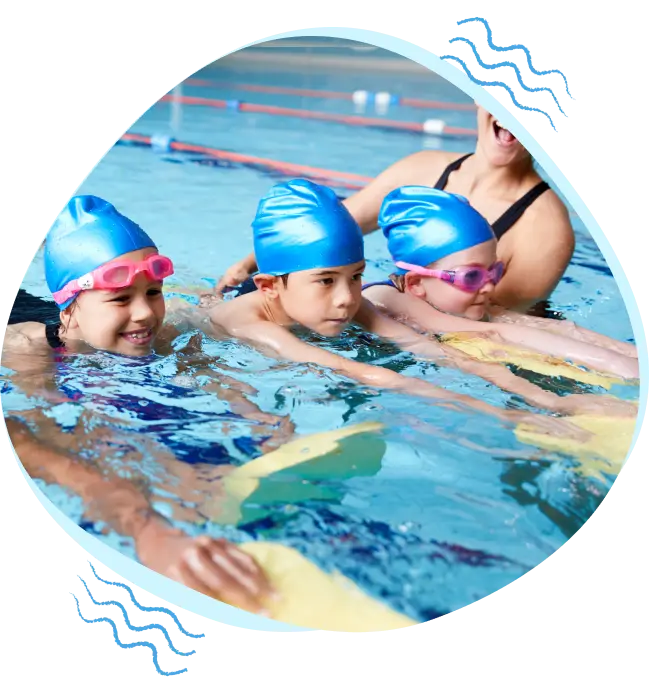
Obviously, taking your child to swimming lessons is a great way to teach them about water safety. But that doesn’t mean that lessons about how to interact with water safely can’t start long before your child ever takes their first lesson. In fact, we encourage parents to start incorporating these concepts as soon as possible. And regularly reinforcing them is a great way to ensure that a healthy respect for the water continues throughout your child’s life.
But not all parents know where to start. That’s why our team at your favorite swim school in Frisco, TX, put together this list of things you can do with your child even when they’re not at lessons.
How to Reinforce Water Safety at Home and Beyond
1. Talk About Water Rules Often
Kids learn through repetition. The more often you talk about water rules, the more likely they are to remember them when it matters. Keep things simple and consistent so they don’t feel overwhelmed.
- Teach children that running near pools or on wet surfaces can cause injury
- Explain that they should always ask for permission before getting in the water
- Share that they should always stay within sight of a responsible adult
2. Practice “Reach, Don’t Go” Safety
Even young kids love to help. But if they see a friend struggling in the water, they might not understand that they are not the best person to lend a helping hand. Teach children that there are better ways to respond, such as the following:
- Reach with a pool noodle, towel, or stick
- Call for help right away
- Never jump in to rescue someone unless a trained adult is present
3. Make Bath Time a Learning Moment
You don’t need a pool to start building water skills. In fact, your child will be introduced to the bathtub long before they ever get into a pool. And, bath time offers a relaxed space where kids can practice and get comfortable.
- Blow bubbles to practice breath control
- Practice holding their breath for a few seconds
- Talk about keeping water out of their mouth and nose
4. Always Designate a Water Watcher
Adults, this guideline is for you, and trust us because it matters. When multiple adults are around, it’s easy to assume someone else is watching the kids. That’s when accidents can happen. In fact, more than 75% of bathtub and shower-related drowning deaths involve children under five, and about 90% happen when a responsible adult isn’t actively supervising. Infants are also more likely to drown at home, which is why staying fully present around water is so important.
So, whether your kids are taking a bath at home, swimming in the backyard pool, or are playing by a body of water, put the following guidelines to good use.
- Assign one adult to actively watch the water at all times
- Rotate the role every 10 to 15 minutes
- Avoid phones, conversations, or other distractions
5. Use Coast Guard-Approved Life Jackets
Even if your child is a strong swimmer, we highly encourage the use of life jackets. But not all life jackets are the same. Some are just toys and can create a false sense of security.
- Use properly fitted, Coast Guard-approved life jackets
- Save arm floaties and inflatables for supervised play only
- Have kids wear life jackets around lakes, boats, or open water
6. Practice Safe Pool Entry and Exit
Getting in and out of the water safely is something kids can practice every time they visit a pool.
- Use ladders or steps instead of jumping in
- Sit and turn before entering when appropriate
- Check the area before getting in to avoid collisions
7. Get Comfortable with Different Water Environments
Not all water is the same. An experience in the bathtub at home is not the same as one in a swimming pool, a lake, or the ocean. Helping kids experience different settings can build awareness and caution.
- Pools have clear edges and visibility
- Lakes may have uneven ground and limited visibility
- Splash pads can still be slippery and crowded (remind kids of the no running on wet surfaces rule)
8. Model Good Water Safety Habits
Have you ever heard the phrase, walk the walk and talk the talk? It absolutely applies here. Why? Because kids pay attention to what you do, not just what you say. Your actions matter every time you’re near water.
- Follow the same rules you set for your child
- Avoid risky behavior like roughhousing in the pool
- Show them how to enter, exit, and move safely
9. Reinforce What They Learn at Swim School
Swimming lessons are a great starting point, but practice outside of class helps those skills stick. At a swim school in Frisco, TX, families trust that instructors often focus on specific techniques each week.
- Ask what skills your child is working on
- Practice those same skills during family swim time
- Keep lessons consistent, so progress continues outside the pool
These small steps can go a long way in helping your child build awareness and respect for the water, both in and out of lessons.
Want to Reinforce Water Safety Skills? Your Swim School Frisco, TX is Here to Help
We’re not trying to toot our own horn (okay, we are), but we’re pretty proud of the priority that we place on water safety at our Frisco, TX swim school. And we think you’ll feel the same way once you give us a try. So, if your child is ready for swimming lessons, why not check out our classes and sign them up? We’re confident that you’ll be glad you did.