
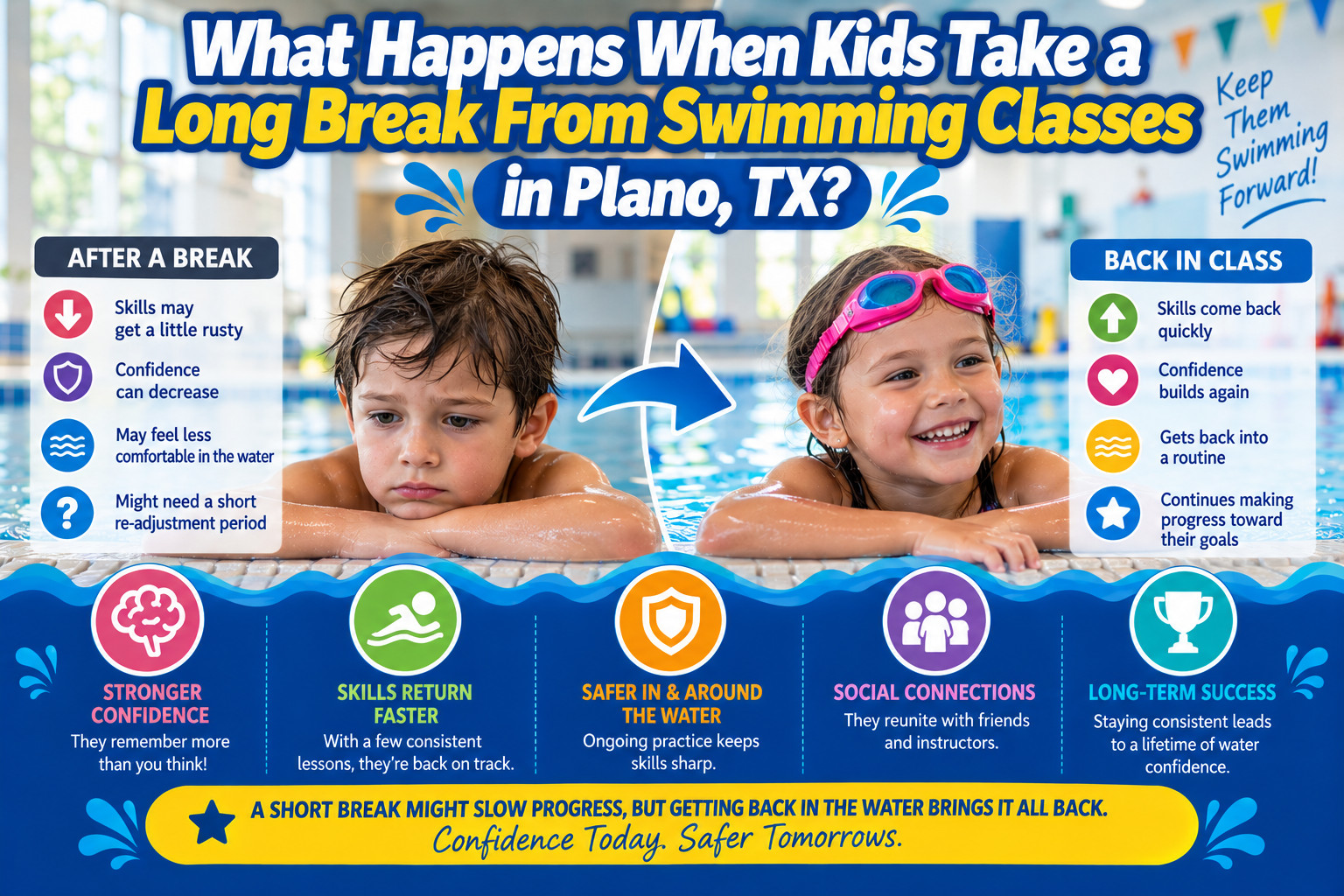
There’s nothing quite like the flexibility of summer. And with all that free time, it means plenty of opportunities to take your kids to the pool (and to their swimming classes in Plano, TX). If your kids were in swimming lessons this past summer or you spent some extra time at the pool, you’re not alone. Kids all over the community were busy splashing around on those family pool days and practicing their latest swim strokes in hotel pools on family vacations.
But now September has arrived, and suddenly, the calendar is full.
Homework, sports practices, club meetings, and school events all compete for the same after-school hours. Younger kids often go to bed earlier too, which eats into evening lesson slots. Keeping the exact same swim schedule from June and July just isn’t always possible once school starts.
So what happens to those swimming skills your child worked so hard on all summer? Here’s what parents in Plano can expect.
Do Kids Forget How to Swim?
Swimming skills don’t just vanish the moment lessons stop for a few weeks. But kids can get rusty after time away from the water, and how rusty depends on a few things.
A child’s age, experience level, and how long they’ve been taking lessons all play a part, along with what skills they mastered before the break, how long the break lasts, and whether they get in the pool at all during that time, even casually.
The reality for your child might be different than the reality of the same-aged child down the street. A swimmer who has taken lessons for two years will often bounce back faster than one who just started this summer.
Newer Skills May Need More Review
Skills a child just picked up aren’t as locked in as ones they’ve practiced for months or years. If your child recently learned to float on their back or coordinate breathing while kicking, those skills probably need more repetition than something they’ve done a hundred times.
Repetition is what turns a new movement into something that feels automatic. Without it, the movement can feel unfamiliar again, even if the child still technically remembers it.
If your child needs to revisit a skill after a break, that’s normal, and it doesn’t mean the earlier lessons didn’t work.
Confidence Can Change Along With Ability
Here’s something parents don’t always expect. Skill and comfort aren’t the same thing. A child can still physically know how to do something and still feel unsure about doing it again.
Younger swimmers especially may need a little time to get used to putting their face underwater, floating without help, swimming away from the wall, or moving into deeper water.
If your child hesitates, try not to say, “but you already know how to do this.” That can feel dismissive and lacks the encouragement that kids thrive on. Encouragement and patience usually work better than pointing out what they should remember.
Back-to-School Doesn’t Have to Mean Giving Up Swimming
Your fall schedule probably doesn’t match your summer schedule, and that’s fine. Take an honest look at what your family’s week actually looks like right now.
Depending on your situation, that might mean a different lesson day or time, weekend classes, fewer pool visits for fun, or picking lessons back up whenever your schedule allows.
The point isn’t to recreate summer exactly. It’s to find whatever chances you can for your child to keep spending time in the water.
Returning to Swimming Classes After a Break
When your child comes back to lessons after time off, expect the first class or two to include some review before moving on to anything new. Instructors typically want to see what a child remembers and where they could use more practice.
In many cases, kids will pick up right where they left off. But for other kids, that might not be the case, especially those who had some water anxiety at the beginning of the previous swimming lesson season. Think of it like riding a bike. Even if you learned how to ride a bike two decades ago, if you haven’t ridden for a while, you might be a bit wobbly the next time you climb on a bike. This is absolutely normal. And it happens with swimming skills, too.
We see reviewing old skills as a step forward, not a step back. It gives your child a chance to feel comfortable before building on what they already know.
Should You Continue Swimming Classes During the School Year?
There’s no single right answer here. Think about your child’s current swimming ability, how recently they started lessons, what they’re hoping to accomplish, and whether they have other chances to practice, plus your own family’s school-year schedule.
Some families find that year-round lessons give their kids more chances to build on their skills. Other families need a break during busy months, and that’s a reasonable choice too. Knowing what to expect when lessons start back up can make that return feel a lot less stressful.
Finding a Schedule That Works Beyond Summer
Summer ending doesn’t mean swimming has to end. School and other activities can change when and how often your child gets in the pool, and that’s just part of managing a busy household.
What matters most is understanding that a longer break can sometimes mean a little review and some rebuilt comfort when your child gets back in the water. That’s a normal part of learning to swim.
If you’re looking for swimming classes in Plano, TX, that can work with your family’s schedule this school year, take a look at what Tatsuki Swimming School offers and see what fits.