
As parents, we face so many priorities. We want our kids to stay healthy. We want to help them obtain a solid education. We want to do everything we possibly can to set them up for a secure, happy, and safe future. That’s why so many parents sign their kids up for swimming lessons at a young age.
In fact, the American Academy of Pediatrics recommends starting swim lessons after a child’s first birthday, and research suggests lessons may help reduce the risk of drowning. At Tatsuki Swimming School, we absolutely agree.
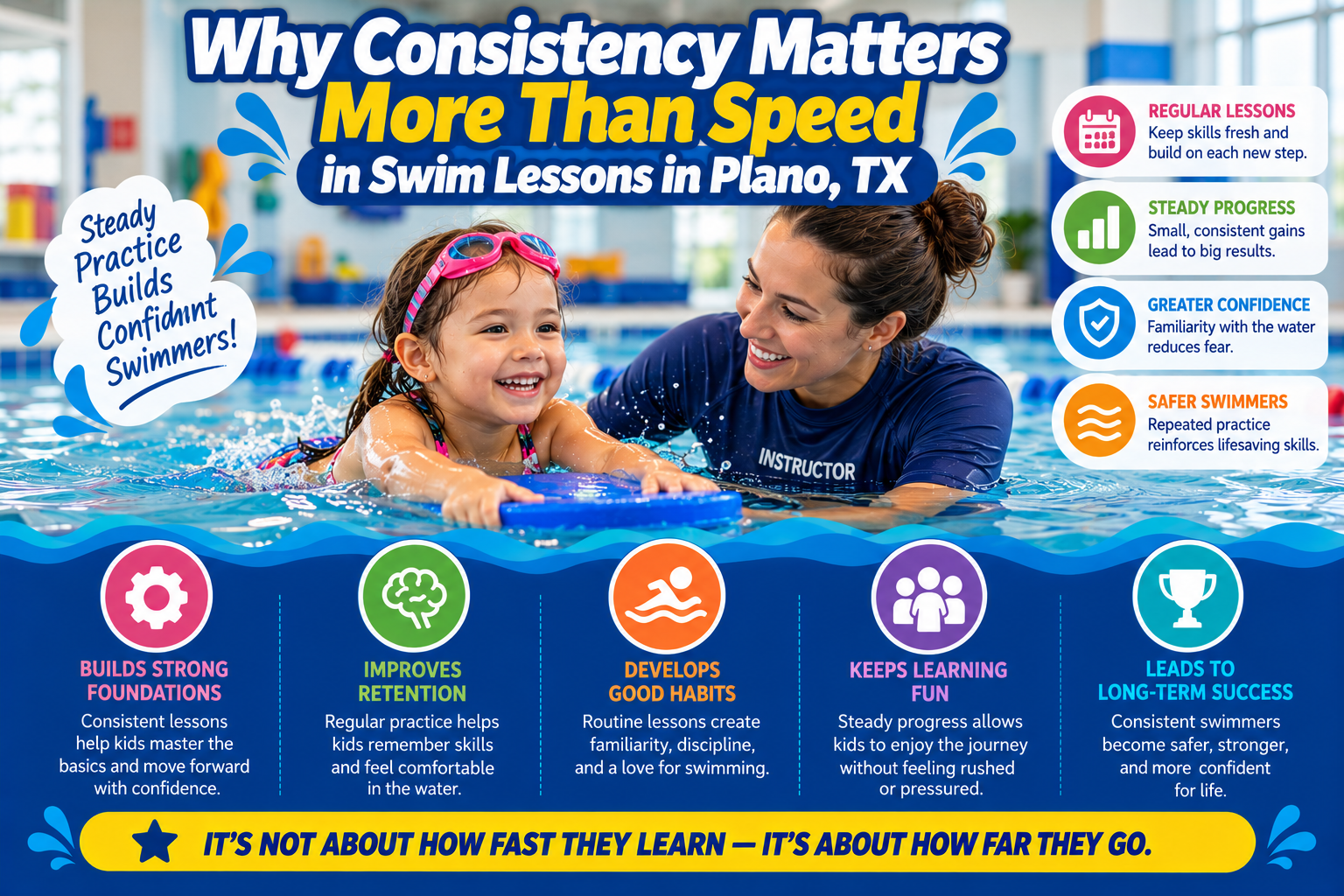
But signing your child up for swim lessons is only the beginning. When it comes to building swimming skills, consistency matters far more than how quickly a child moves from one skill or level to the next. Regular practice gives children the time and repetition they need to become more comfortable, capable, and prepared in the water.
Swimming is a Skill Built Through Repetition
Many people think that learning to swim is like learning to ride a bike. Once you know the basics, you’ll be fine and can simply pick it up every time you visit a pool or the beach. And while there is some truth to that, relying on just a few lessons to teach your child everything they need to know to be safe in the water can be misleading.
Swimming requires several skills to work together at once. Kids must coordinate their breathing, body position, kicking, floating, arm movements, and balance in the water. A child may understand exactly what an instructor is asking but still need time before their body can perform that movement consistently.
Regular swim lessons in Plano, TX, give children repeated opportunities to practice those skills until they start to feel more natural. That repetition can make a major difference in how comfortably and consistently they respond in the water.
Every Child Progresses at a Different Pace
Though parents may dream of their child becoming the next Michael Phelps or Katie Ledecky, not all kids will become Olympic swimmers. That said, there are a few things to learn about how both Olympians approached their swimming lessons. Both Phelps and Ledecky started swimming lessons young and approached their lessons and training consistently.
For everyday swimmers, that consistency is just as important. Sure, progress will look different from one child to the next. And of course, age can play a role, but so can coordination, personality, previous water exposure, comfort level, and learning style. Some children are eager to try new skills right away, while others need more time before they feel comfortable.
One child may happily put their face underwater but struggle with floating. Another may float easily but need more time to coordinate kicking and breathing. Neither child is necessarily ahead or behind.
Parents can help by focusing on their own child’s progress rather than comparing milestones with siblings, classmates, or other swimmers.
Why Gaps Between Lessons Can Make Progress Harder
One challenge we often hear from parents is that their kids are busy and overscheduled. We get it. Today’s kids have busy social lives, school responsibilities, and often, plenty of extracurricular activities that keep their bodies active and their minds engaged. And honestly, we want swimming lessons to be one of those activities that make the priority list.
That’s because swimming skills are easier to build when children have regular opportunities to practice, rather than long stretches between lessons.
The reality is that longer gaps between lessons can make it harder for children to hold onto newly learned skills. When too much time passes, they may need to spend part of the next lesson rebuilding comfort or practicing movements they had only recently started to master.
Regular lessons can help children:
-
Remember proper breathing and body position
-
Build on skills from one lesson to the next
-
Feel more comfortable getting back into the water
-
Spend less time relearning familiar movements
-
Develop stronger habits through repeated practice
This is one reason consistency matters so much. Swimming skills build over time, and regular practice gives kids more chances to keep moving forward.
Consistency Builds Skills that Children Can Rely On
The key to any new skill is consistent learning and practice. When you sign your child up for swim lessons in Plano, TX, we’ll create a fun, safe, and welcoming environment where you’ll quickly see your child’s skills and appreciation for the water grow.
With regular practice, those skills can become more familiar, more natural, and easier to rely on over time. The goal is not to rush your child from one level to the next, but to give them the repetition, support, and time they need to become a stronger, more comfortable swimmer.