
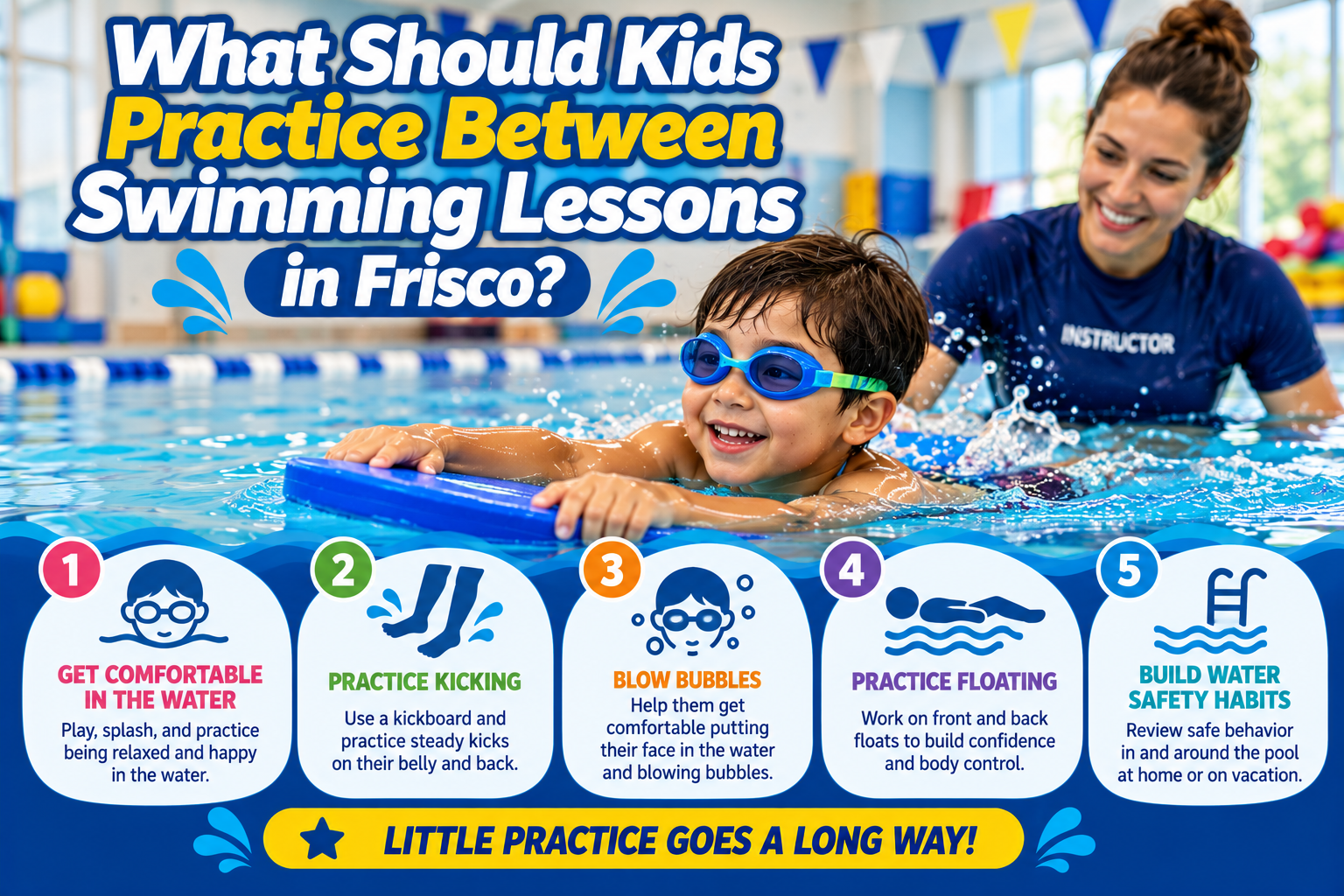
Parents ask us all the time what they can do with their kids between seasons or sessions to keep improving their swimming skills. And while the obvious answer is to take them to the beach or to the community pool, that’s not always an option.
Thankfully, there are plenty of things you can do with your kids, outside of spending time in the water. In fact, when parents and kids work together to reinforce the skills learned during swimming lessons in Frisco, it can go a long way toward creating a happier, healthier, and stronger swimmer.
Practice Comfort in the Water
Though not everyone has easy access to a pool, you likely have a bathtub at home. Bathtime provides an excellent opportunity to practice some of the most basic skills that we want our young swimmers to achieve.
So, depending on your child’s age, you can achieve two things at once by practicing the following skills. Supervised, of course.
-
Getting the face wet
-
Blowing bubbles
-
Putting ears in the water
-
Practicing calm entries into the pool
-
Spending relaxed time in the water
That said, if your child is at all timid around the water and doesn’t feel comfortable trying these activities, we discourage you from pushing the agenda. Instead, let us know during their first lessons that these have been fears for your child. We can spend a little extra time helping your child feel comfortable, while still making it feel like it’s on their own terms.
Work on Kicking and Body Position
You may think you can only work on kicking and body position in the water. But that’s not the case. In fact, you may recall your own days of swimming lessons, when your instructor modeled the correct kicking motions or how to move your arms while standing on the pool deck.
You can take a similar approach at home. Kids can practice kicking motions on the floor or review arm movements out of the water. At the pool, they can hold onto the wall, use a kickboard if appropriate, or practice supported floating. The goal is not perfect technique. It’s simply to help the movements taught during lessons feel more familiar.
Practice Breathing Without Overcomplicating It
One activity that kids often love to do at home is to practice holding their breath. Not only does it make them feel a little bit competitive (in a good way), it can also help to build lung strength. And, when your child can hold their breath a bit longer, it can make certain swim strokes a bit easier.
For younger kids who aren’t quite ready to practice holding their breath, or don’t yet understand the concept, try making it playful. Have them pretend to blow bubbles through a straw into a cup of water outside, or practice long, slow exhales as if they were blowing imaginary bubbles. These simple activities can help them get used to controlling their breath. This is also an excellent alternative for kids who don’t yet feel comfortable blowing bubbles in the bathtub.
Review Floating and Rolling Skills
You might not be able to actually practice floating without access to a pool or body of water. But you absolutely can review the concept of floating and rolling, too. In fact, this is a great activity to build foundational skills and strength, while also helping kids get their wiggles out.
Have your child lie on their back with their arms and legs extended as if they were floating. They can also practice rolling from their back to their stomach and back again on the floor or a soft mat. These simple movements can help reinforce body position and make changing positions feel more familiar when they return to the water.
Reinforce Water Safety Habits Every Time
Lastly, we really appreciate parents reinforcing water safety between swimming lessons in Frisco. At Tatsuki Swimming School, our greatest goal beyond teaching kids how to swim is teaching them to respect the water and stay safe in its presence.
Here are some simple things parents can do to reinforce the water safety message without creating fear.
-
Ask permission before entering the water
-
Walk instead of run near the pool
-
Stay within an adult’s reach when needed
-
Know where the steps or pool exit are
-
Never swim without adult supervision
Let the Instructor Lead the Technique
We know that we have provided some suggestions on how you can reinforce the swimming skills that we’re teaching your kids. But we also want to share that every time your child goes to the pool, or every day at home, doesn’t need to be an opportunity to conduct a formal lesson.
When we provide too much coaching or kids feel like we’re harping on them, it can actually create the opposite effect of what we are trying to achieve.
So, let your child’s swimming instructor lead the technique, and then stay consistent in your messaging. And, on occasion, take a few minutes here or there to practice some skills. This helps to secure the messages and skills we’re trying to land, without it being too much for your child.
Small Practice Sessions Can Support Bigger Progress
We love being part of your child’s swimming journey. Whether your child is with us for the long haul or just a few sessions early in childhood to build foundational skills and respect for the water, our goal is to create a positive, rewarding experience.
With just a few minutes of relaxed repetition at home, you can help develop your child’s swim skills.
If you’re looking for swimming lessons in Frisco that help your child build skills step by step, Tatsuki Swimming School is here to help. We’d love to welcome your family and support your child as they become more comfortable and capable in the water.